
Colonel Hanger
An old club, a faded blue coat, and the careful preservation of a gentlemen
Of course, the doorman recognised him instantly. It was, however, the sort of recognition usually reserved for faded portraits of former British monarchs. There was no warmth to it; just professional courtesy. This club, like its neighbours, had long excelled at recognising the shape of a man while forgetting the details of his past behaviour.
“Colonel,” the doorman said, inclining his head with a touch of incredulity.
The Colonel returned the head-tilt with more solemnity than incredulity and passed into the lounge beneath lamps softened by apricot-coloured shades. It was a lamplight that cast the forgiving glow found only in old institutions with short memories.
Everything appeared precisely as it ought to have done. That alone was enough to unsettle him slightly.
The wood panelling had been polished to a rich glow. The carpet had lost that strident tobacco fug that worked its way up of an evening and attached itself faithfully to one’s cuffs. The curtains had been replaced by heavier ones of blue silk, though not quite, he thought, the correct blue.
The waiter who took his coat was young enough to regard full evening dress as costume rather than ordinary civilised attire. Still, he handled the faded blue cloth with dutiful care.
“It was a satin coat, bride en plain et sur les coutures,” the Colonel mumbled, remembering another blue coat, another room, another century entirely. “The first satin coat that had ever made its appearance in this country.” Shortly after, he thought, satin-dress clothes had become common amongst well-dressed men.
The waiter smiled politely with the practised air of a man well-trained not to distinguish between wit or deterioration.
The Colonel took his old seat beside the fire. It struck him as either deeply touching or extremely efficient that the club still remembered where he preferred to sit. A silver bowl of his favourite chocolates rested beside the lamp, and cocoa dust clung faintly to the saucer. Nearby, under the low amber glow, two women shared a tall gooseberry fool, the daintiest of teaspoons representing the diplomacy of a young English attaché dividing a continent after some minor skirmish.
“There are three predominant passions which reign in the female breast; gaming, intriguing, and drinking,” he recalled, although the pair before him appeared chiefly occupied with spooning cream into their mouths while discussing somebody called Amanda’s second husband.
A waiter arrived carrying whisky with the ceremonial precision usually associated solely with the procession of the cap of maintenance at the State Opening of Parliament.
“Welcome back, Colonel.”
Back, eh? Curious word.
He had been away a considerable time. America first, of course, with the Hessians. Damp Carolina, headwinds and unpleasant fevers, but it is, of course, of the greatest utility for a young man to be absent in a foreign country for a considerable time. As his father had told him: “Abroad one must behave well or have half-a-dozen swords through one’s body in a week.”
Then prison, although naturally one did not phrase it so crudely. There are places in London where gentlemen simply disappear for a period and return quieter, and with diminished expectations. In these circles, the honour, like the gout, is hereditary.
“Thank you, Edward.”
The waiter was not – and never had been – Edward. This troubled neither of them.
At the far side of the room sat a hale, hearty man, by no means advanced in years, though undeniably of a corpulent habit, consuming a marmalade pudding with some intensity. Beside him, beneath a portrait of an Admiral nobody still living could confidently name, a young couple shared a bottle of Champagne while performing the modern habit of appearing simultaneously intimate and completely elsewhere.
The Colonel watched them with mild alarm.
Young married women should live in seclusion for a certain time after marriage, he reflected. Instead of appearing in public dining rooms before the consommé had settled.
The woman tossed her scarf over her shoulder, and a faint hint of orange blossom drifted across the room.
“One morning,” he announced suddenly to nobody in particular, “I had dressed myself entirely before my servant reminded me that I had forgotten my stockings.”
The women with the gooseberry fool laughed politely.
Encouraged, he continued, “Another time I walked halfway across St James’s carrying a bookseller’s candle entirely by mistake. You see, I had been deeply engaged in calculating the immense increase in revenue that might accrue to the state from a tax on knives, forks and spoons. Or Scotsmen. I forget which…”
One of the women blinked twice and resumed eating. The young man got up and moved towards the door with the rolling gait of a duke walking down a gutter in a thunderstorm.
The Colonel smiled faintly into his whisky as a man with the whitest of moustaches took the chair on the other side of the fireplace and took out a newspaper and a red apple. He looked as if he had assumed that position and that crossword every evening since at least the last war. Whenever that was.
The apple was newer, but still as bruised in places as its owner, and browned quickly once he had taken the first bite. He took a spoon from the dish on the mantelpiece and sprinkled demerara sugar on its flesh.
“Word for pompous,” he said aloud. “Five letters.”
The Colonel paused.
“Well,” he said at last, settling deeper into his chair, “I was once informed by the Prince Regent himself that I had become too free and coarse for royal taste.”
The gentleman nodded politely, though without any visible interest, and pencilled something into his crossword.
“There was a period in Carolina,” the Colonel went on, “during which I subsisted entirely upon opium and port wine.”
The gentleman looked up briefly.
“Sounds unpleasant.”
“Not at all. There was very little else in the house, besides eggs and espionage.”
He paused.
“Of course, before America, there had been that incident with the daughter of a vendor of cabbages…”
He sipped his whisky.
“I do not wish to trip up old grievances,” he added, “particularly as one of the parties who profited at my expense is dead and the other remains a near friend. But I considered myself most unjustly treated. But then, she was always half-seas over.”
The young man returned with a silver tray of peach petit fours; each dusted with sherbet.
Everything remained. The lamps. The silver plate. The old desserts no one genuinely wanted. The careful waiters, bringing honey with the tea service, and the candle wax stippled onto white linen. The quiet choreography of refinement continued long after the original audience had departed, simply because nobody left had the confidence to abandon it.
One felt that lack in the pauses. In the careful movements and the way in which the younger members looked around the room after laughing too loudly.
The club had survived beautifully. That was the trouble.
The Colonel lifted his glass again. Somewhere in the whisky there lingered the sweetness of peach, old sugar and lemonade, softened and faded almost beyond recognition.
Great characters are seldom worth a strict examination, he thought. They are like old china jars; admired for the workmanship, but generally containing dust, dirt and cobwebs when one finally looks inside.
The gentleman opposite finally lowered his paper.
“Grand,” he said.
“I beg your pardon?”
“The clue,” the gentleman replied. “Pompous. Five letters.”
The Colonel sat back slowly.
“Ah, yes,” he said. “And yet I have often lamented that I was not born with wings. What service I might have rendered my country then.”
Blue Hanger is a series of blended malt whiskies, created for the diplomatic export market in 1934 by esteemed bottler Berry Bros. & Rudd. It is named after William “Blue” Hanger, 3rd Lord Coleraine, an 18th-century patron of the shop, who was known for his signature blue attire.
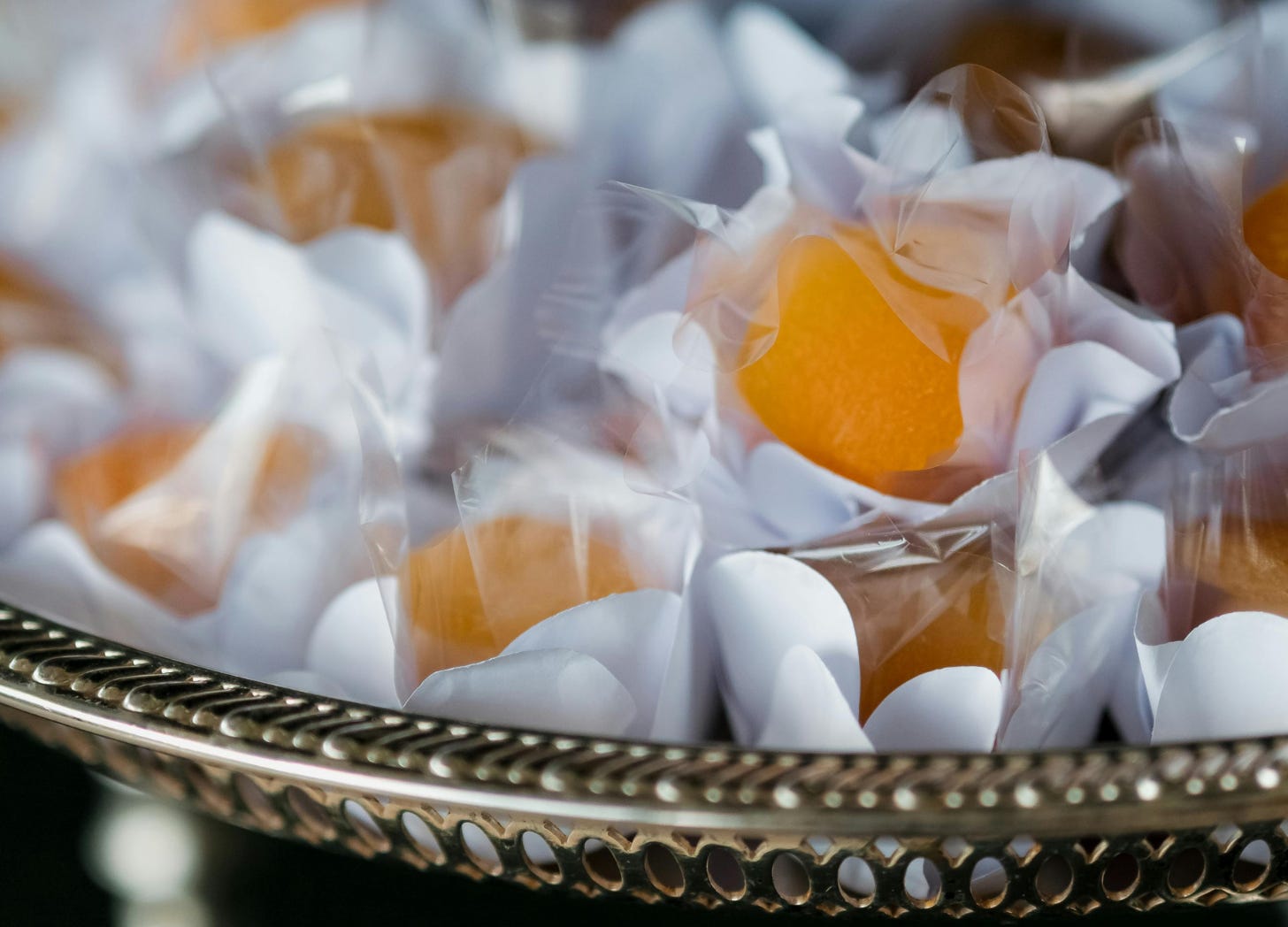
The 14th edition, launched earlier this year, gave me cocoa, gooseberry, candle wax and peach yoghurt on the nose, orange blossom, honey, browned red apple and sherbet on the palate. On the finish I was left with demerara sugar, peach jelly sweets and lemonade.
While not much is known about William Hanger, fortunately his brother, Colonel George Hanger, the 4th Lord Coleraine wrote a long, rambling and repetitive autobiography which covered his time as a schoolboy chasing after ‘inamortas’ in Windsor Little Park, as a soldier in the American Revolutionary War, his ‘season’ ‘in Brighton with the Prince of Wales and his trips in and out of debtor’s prison. Almost all of the material above, comes from him, with my gratefu' thanks.